














The Plymouth Prowler was one of the most distinctive vehicles of the late ’90s and early 2000s, designed to capture the essence of classic hot rods while ignoring conventional automotive design norms. Fast forward to today, and the allure of the Prowler continues to evolve, especially as custom modifications push the boundaries of what this unique car can achieve.
A Nostalgic Design for Hot Rod Enthusiasts
Back in the year 2000, the Prowler was a daring move by Plymouth, showcasing a design that harkened back to classic American hot rods. Its radical, sleek styling set it apart from the wave of homogenous sedans and minivans dominating the roads. While contemporaries leaned heavily into practicality, the Prowler was unabashedly focused on aesthetics, evoking the nostalgic, “chopped-and-slammed” look that resonated with enthusiasts.
The Prowler’s weight was comparable to that of the Honda S2000, tipping the scales at around 2,800 pounds. However, it distinguished itself not through high-revving performance but rather with a modest V6 engine and a four-speed automatic transmission—elements that left many driving purists yawning.
A Transformation Like No Other
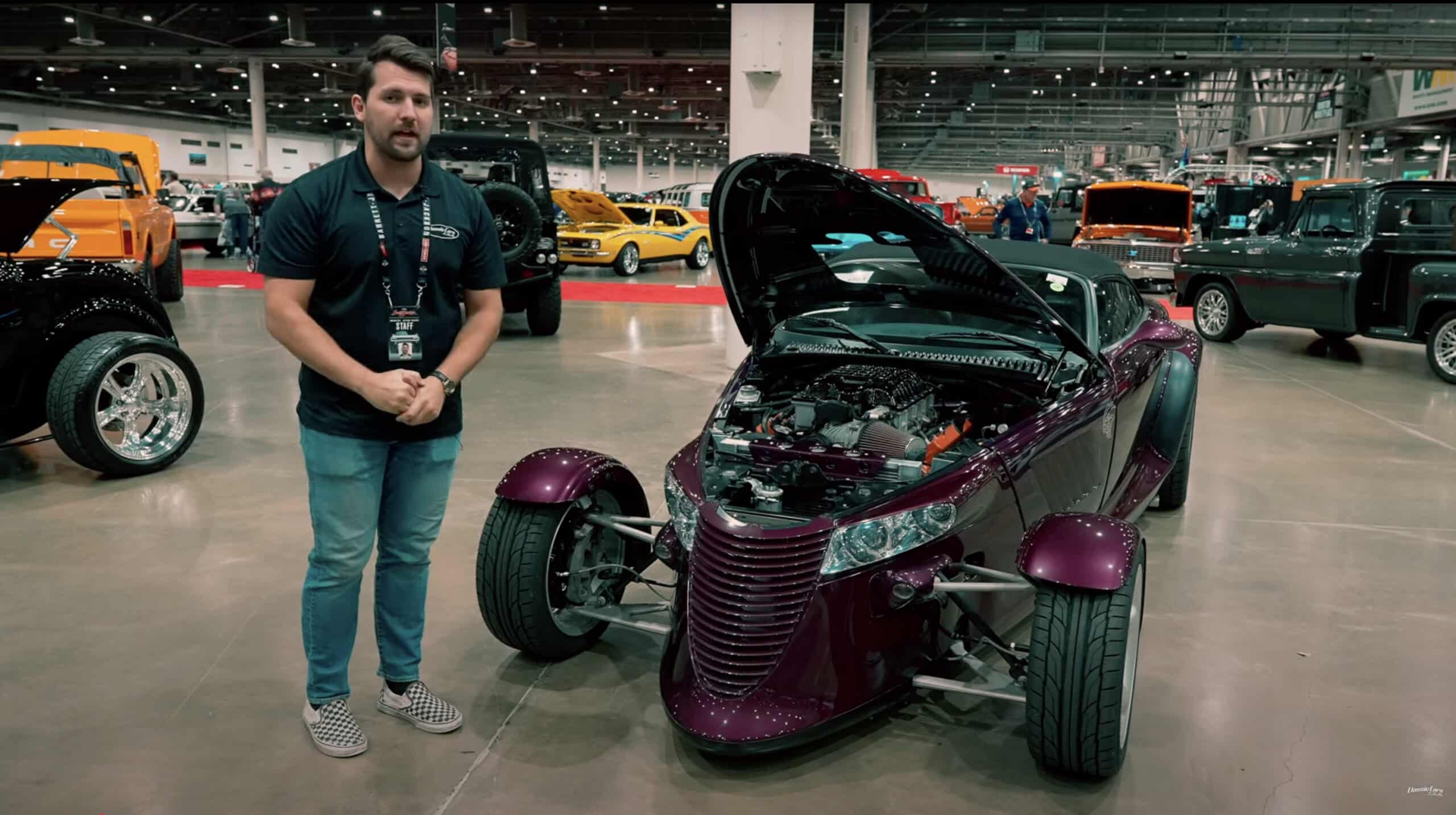
Enter Michel’s Auto Design, a Wisconsin-based workshop taking the Prowler to a new era. Their innovative “Sinister” package revolutionizes the Prowler with a powerful Hellcat engine swap. This conversion replaces the stock V6 with a Mopar crate Hellcat engine, delivering an impressive 707 horsepower. Accompanying this is a Tremec T56 six-speed manual transmission, providing a thrilling driving experience that the original Prowler could only dream of.
The Sinister upgrade package doesn’t stop at the engine. It includes a custom independent rear suspension, enhanced cooling systems, and a unique exhaust setup, all meticulously designed to fit within the Prowler’s distinctive frame. Remarkably, it retains functional air conditioning, emphasizing how carefully the space is optimized.
Visual Appeal Meets Performance
The aesthetics of the Prowler remain intact, but now they serve as a canvas for high-octane performance. The original design’s sharp lines and aggressive stance look even more striking when paired with the raw power of the Hellcat engine. The “front bumper delete” provides an even more menacing front end, reinforcing the vehicle’s identity as a showstopper.
This marriage of visual appeal and enhanced performance marks a pivotal moment for Prowler owners. Customization reflects the growing demand for personalized vehicles that not only look unique but also offer thrilling performance.
The Future of Classic Cars
As car enthusiasts continue to pursue the fusion of nostalgia and modernity, the evolution of the Prowler serves as a case study in how classic designs can be revitalized for the contemporary market. The trend toward customizable performance—merging the look of the past with the capabilities of modern engineering—suggests a shifting landscape in classic car ownership.
The Prowler’s journey from a quirky car to a formidable performance machine exemplifies this shift, reminding us that car culture thrives on innovation, creativity, and the pursuit of new thrills.
In conclusion, the Plymouth Prowler, once an eccentric tribute to hot-rodding, has transitioned into a high-performance icon thanks to innovative modifications. Enthusiasts and collectors alike can look forward to how this legacy continues to evolve, bridging the gap between nostalgia and modern muscle car culture.