





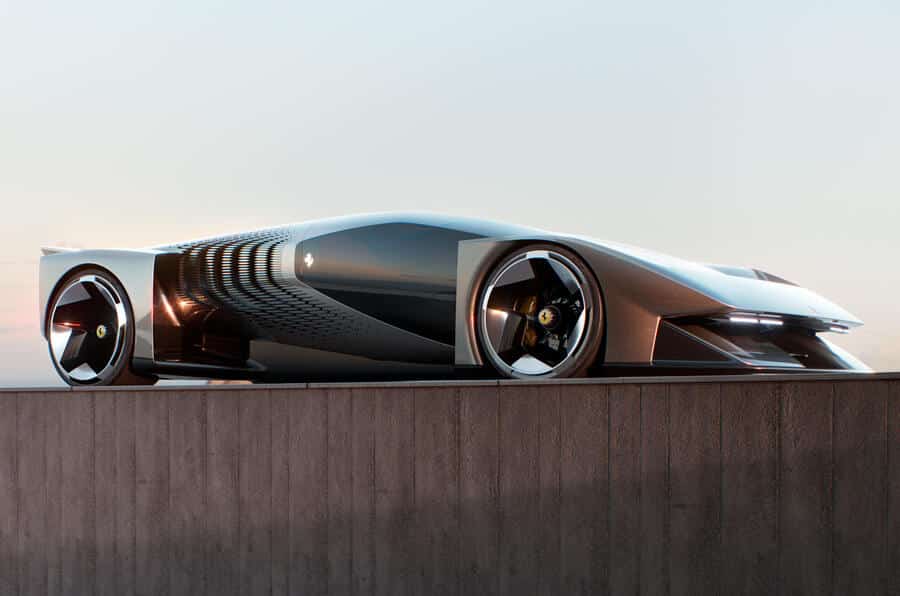
Ferrari has unveiled its innovative concept car, the F76, which embraces a futuristic digital design and introduces a unique driving experience with control facilitated by two drivers.
This model is a tribute to Ferrari’s first victory at the Le Mans 24 Hour race in 1976. The F76 is the brainchild of chief designer Flavio Manzoni, who describes it as a “design manifesto” intended to envision the future aesthetics of Ferrari vehicles.
The revelation of the F76 comes shortly after the announcement of Ferrari’s upcoming electric vehicle, set to debut next year, leading many to speculate that the F76 is also constructed on an electric platform. This assumption is supported by its state-of-the-art driver-by-wire technology.
Despite its avant-garde appearance, the F76 retains essential Ferrari design elements, such as distinctly squared wheel arches and a floating front splitter, features that are reminiscent of the F80 hypercar.
According to Ferrari, the F76 was developed using a form-follows-function approach, which they claim will influence future production models. Notably, this concept introduces an innovative interior layout where the two drivers are positioned in separate fuselages, a design aimed at optimizing airflow. This unique configuration is said to enhance the spatial dynamics of the vehicle, transforming the traditional driving setup.
The design and technology integrated into the Ferrari F76 not only signify a bold step forward for the brand but also set the groundwork for what enthusiasts can expect in future Ferrari models. This unique approach to design reflects a commitment to innovation while honoring the rich heritage that Ferrari embodies.
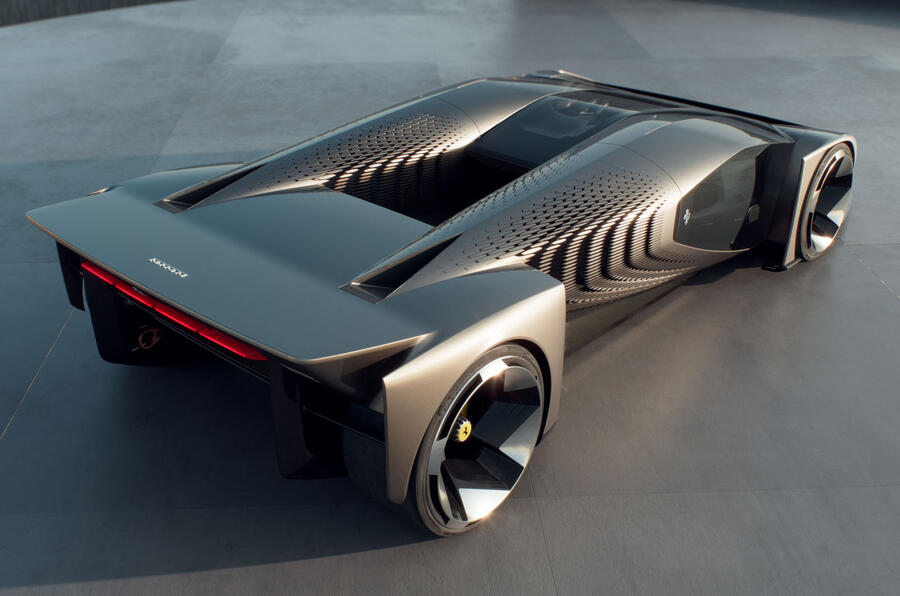
In conclusion, Ferrari’s F76 embodies a remarkable fusion of advanced automotive technology and iconic design elements, setting the stage for the brand’s future. As the automotive landscape evolves, this concept car not only honors Ferrari’s spectacular legacy but also showcases a commitment to innovation and sustainability. The introduction of features like separate driver fuselages and driver-by-wire technology highlights the possibility of personalized driving experiences that could redefine what we expect from high-performance vehicles in the years to come.