




















Tesla Semi updates and developments in autonomous trucking have understandably captured attention at this year’s Advanced Clean Transportation (ACT) Expo. However, an alternative future was notably present, prominently featuring hydrogen power. Automakers like Honda revealed ambitious hydrogen fuel-cell big rigs, while Hyundai took the opportunity to showcase the latest iteration of its fuel-cell-powered Xcient Semi. Not to be outdone, Toyota announced plans for a fleet of hydrogen fuel-cell trucks operating in Southern California. Amidst this surge of fuel-cell excitement, a potentially game-changing trend emerged: the possibility of preserving the internal combustion engine (ICE) through hydrogen adaptations.
In a recent seminar dedicated to hydrogen-powered internal combustion engines (H2 ICE), industry leaders—executives from Volvo, Bosch, Cummins, and Cespira—acknowledged the significant strides being made in this area. They joined voices to discuss why the trucking sector is particularly drawn to this technology. Their compelling argument rests on several critical points: the existing mechanical expertise in this engineering space, the high efficiency of hydrogen engines compared to pure fuel cells or electric vehicles (EVs) in demanding scenarios, and a reduction in tailpipe emissions compared to traditional diesel and natural-gas trucks. Remarkably, these insights echo initiatives from manufacturers like Toyota, which is innovating in hydrogen internal combustion not only for everyday vehicles but also for race cars.
Reflecting on a common sentiment, many of us have been conditioned to see hydrogen as a promising, almost mythical “fuel of the future.” If you grew up during a certain era, you might remember the excitement around hydrogen as the next big thing. This is the most abundant element in the universe, and it has long been showcased in various concept vehicles over the decades, such as GM’s 1966 Electrovan and the more recent BMW Hydrogen 7 and Mazda RX-8 Premacy. While some of these earlier models utilized hydrogen fuel-cell technology akin to the current Toyota Mirai and Hyundai Nexo, the BMW and Mazda vehicles stood out because they used internal combustion engines modified to fire on hydrogen. In a time when electric vehicles were still a topic of debate, hydrogen-powered cars seemed like a viable contender.
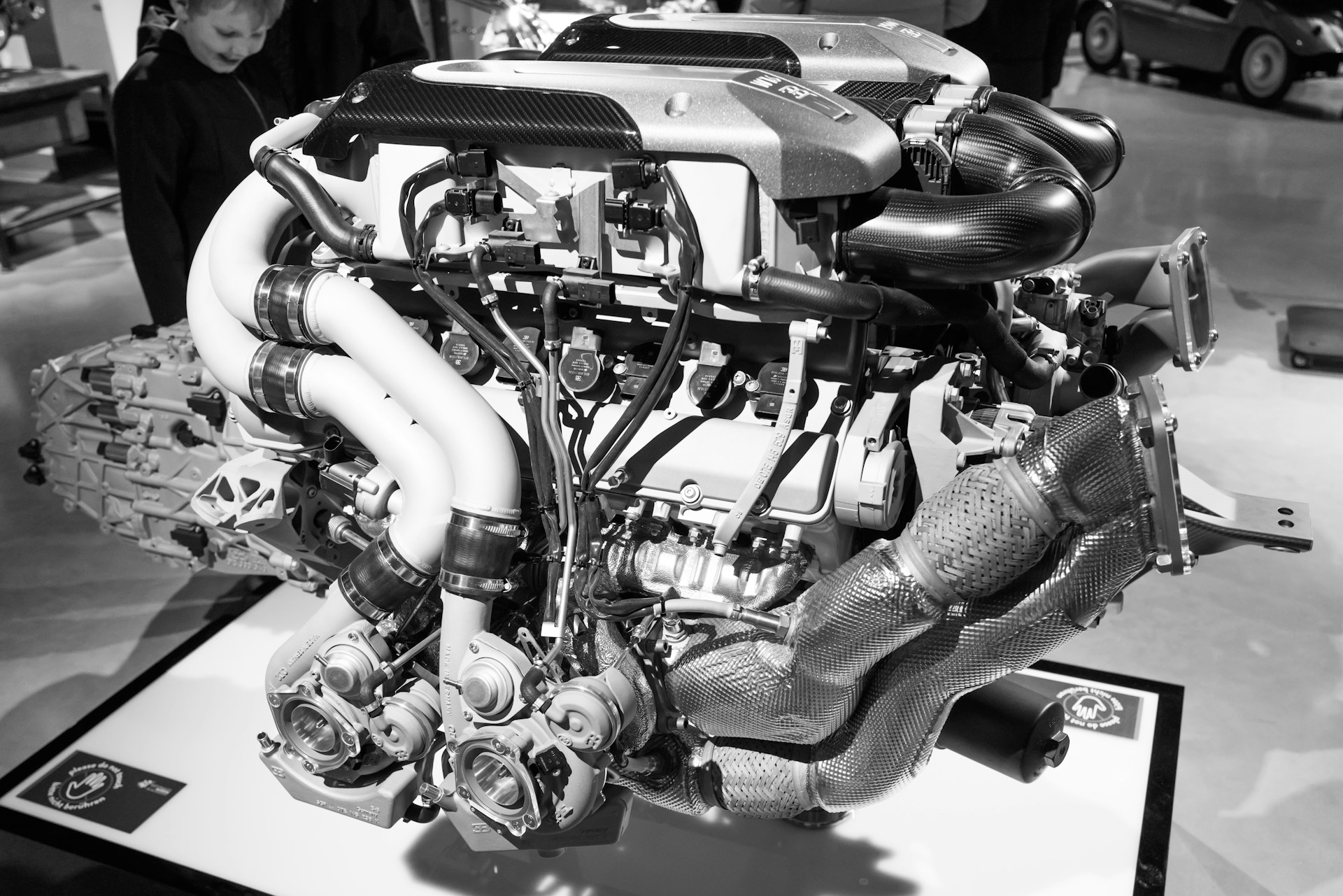
The mechanics behind shifting from conventional petroleum engines to hydrogen ones are theoretically straightforward. A hydrogen engine operates on principles similar to those of gas or diesel engines: hydrogen, whether in gas or liquid form, gets injected into the cylinder, where it’s ignited. This explosion converts chemical energy into the mechanical energy that powers the vehicle forward—a process well encapsulated in the age-old mantra of “suck, squeeze, bang, and blow.” This fundamental operation has been the backbone of automotive propulsion for over a century.
As we stand on the brink of potentially ushering in a hydrogen renaissance, the conversation has shifted. Industry interest is notably growing, yet significant investments and advancements in hydrogen production, storage, and infrastructure are crucial for these concepts to transition into mainstream applications. This isn’t just about technology—it’s about understanding what many auto enthusiasts hold dear. The internal combustion engine has long been the heart of the automotive experience for countless fans. If we can integrate hydrogen into this legacy, we may discover a middle ground that respects tradition while moving towards a cleaner, more sustainable future.
Embracing hydrogen doesn’t mean discarding our past; it means finding innovative ways to adapt and evolve. For many car lovers, the idea of keeping that engine rumble alive—while contributing to a healthier planet—could be the dream scenario we never knew we always wanted. The road ahead is uncertain, but the advancements we witness today could very well serve as the building blocks for a shared automotive future that honors both innovation and tradition.Sure, let’s dive deeper into the potential advantages of hydrogen internal combustion engines (H2 ICE), highlighting insights from industry experts while ensuring the writing connects with readers on a personal level.
When you think about the future of transportation, you might envision electric vehicles zipping around silently or maybe even flying cars. But have you ever considered hydrogen? Companies like Bosch, Cummins, and Cespira are betting big on H2 ICE technology, and for good reason—there are some compelling benefits that might just change your mind about how we power our vehicles.
One of the remarkable aspects of H2 ICE that Chad Fohne, Cummins’ fuel delivery system engineering leader, emphasizes is its technology commonality. Imagine being able to swap out your old diesel engine for a hydrogen one with minimal modifications. That’s not just a pipe dream; it’s happening. Fohne points out that because hydrogen engines share many similarities with their diesel and natural gas counterparts, repair shops can easily adapt to service these vehicles. So, if you’re someone who relies on a truck for work or personal use, you’ll find peace of mind in knowing that finding help when something goes wrong won’t be a hassle.
And it’s not just Cummins that’s convinced. Brett Keppy from Bosch echoes these sentiments, highlighting that many of the challenges faced when refining hydrogen engines are akin to those they’ve tackled with traditional engines for years. It’s like having experienced mechanics who are used to fixing combustion engines stepping into the hydrogen arena—this crossover expertise can lead to quicker advancements and solutions.
But let’s talk about real-world implications. From a regulatory perspective, jurisdictions like the European Union are already classifying H2 ICE vehicles as “zero emissions.” What does that mean for you? If you live in an area with strict emissions regulations, this could offer a viable solution for keeping your vehicle on the road without the stress of constantly looking over your shoulder at environmental laws.
Now, you might wonder about logistics—how does hydrogen fuel get to you? The beauty of hydrogen is that it can easily be transported by truck. This opens up possibilities for regions that lack the electrical infrastructure to support widespread electric vehicle usage, such as many parts of Africa. For those who need to drive in areas where traditional EV charging isn’t an option, hydrogen may be the answer you’ve been looking for.
Perhaps the most enticing aspect for drivers is how familiar the experience can be. Imagine getting into a hydrogen-powered vehicle and feeling just as you would in a gasoline or diesel car. Toyota has highlighted that hydrogen combusts faster than gasoline, which means quicker responsiveness. You’d feel that immediate, exciting connection as you accelerate—a thrill many of us chase when we hit the road. Cummins reports that their hydrogen engines maintain “diesel-like torque curves,” enabling you to enjoy that satisfying power when you need it most.
Cespira’s high-pressure direct-injection technology elevates this experience even further. This system not only mimics the performance of existing engines but can actually enhance it. Take Scania’s vehicle: by converting their 12.7-liter turbocharged inline-six to run on hydrogen, they increased its power from 560 hp to an impressive 600 hp while also improving responsiveness. For drivers who crave power and performance, that’s a notable gain.
In summary, as we explore the realm of hydrogen internal combustion engines, it’s clear that there’s a mixture of familiar comfort and innovative potential. Whether you’re a seasoned driver looking for a new vehicle or someone interested in the future of sustainable transportation, H2 ICE technology breaks down barriers, making it a compelling option. So, the next time you hear about hydrogen vehicles, remember: it’s not just a technological shift—it’s an invitation to rethink how we drive in a sustainable and adaptable way.**Good to Be True?**
Despite the wave of enthusiasm sweeping through the hydrogen industry, the reality is that we’re still facing significant obstacles in realizing the full potential of hydrogen as a clean energy source. It’s easy to get swept away by optimistic forecasts from industry leaders, but a closer look reveals that many core issues remain unresolved.
At the heart of the challenge is hydrogen itself. While it’s the most abundant element in the universe, hydrogen doesn’t exist in isolation; it’s always found in combination with other elements. You’ll rarely find a lone “H” floating around—more often, you’ll encounter it bonded with oxygen as water (H2O), or combined with carbon in compounds like natural gas (methane, CH4).
Extracting pure hydrogen from these compounds isn’t a walk in the park. It’s a highly energy-demanding and expensive affair. Currently, the dominant method for separating hydrogen from its carbon companions is called steam-methane reforming. This process uses intense heat to convert natural gas into hydrogen, carbon monoxide, and carbon dioxide by introducing steam to a catalyst. While this may sound simple in theory, the environmental impact is significant. The byproducts—carbon monoxide and carbon dioxide—are often just released into the atmosphere, adding to greenhouse gas emissions. When hydrogen is produced through this method, it’s labeled “gray hydrogen” if that carbon escapes or “blue hydrogen” if steps are taken to capture it.
To put things into perspective, producing one kilogram of gray hydrogen contributes around 12 kilograms of CO2 equivalent to our atmosphere, while blue hydrogen is slightly better, releasing around 3 to 5 kilograms. Although this might sound like progress, it’s clear we’re still far from the goal of zero emissions, especially when you consider that both gray and blue hydrogen production rely on fossil fuels.
However, hope springs eternal. Thanks to advancements in renewable energy, we can produce hydrogen from water using methods like electrolysis, powered by solar or wind energy, resulting in what’s termed “green hydrogen.” While still cost-prohibitive on an industrial scale, this process generates only about 1 kilogram of CO2-equivalent emissions for every kilogram of hydrogen produced. We’re inching toward a cleaner future, but the journey remains fraught with complexities.
And while hydrogen production is a labyrinth of challenges, the vehicle development side is not without its own set of hurdles. Let’s break it down: the very form in which hydrogen exists can make or break its application in vehicles. Hydrogen can be stored as either a gas or a liquid, each presenting unique challenges.
Gaseous hydrogen is the more straightforward of the two when it comes to feeding it directly into an engine. However, it needs to be stored in a highly pressurized cylindrical tank, which can be cumbersome in vehicle design. Plus, it’s notably less energy-dense than its liquid counterpart, which can store 1.7 times more energy in the same space, enabling longer vehicle ranges.
But liquid hydrogen isn’t a silver bullet—far from it. It must be kept at a frigid -423.4 degrees Fahrenheit (-253 degrees Celsius) to prevent it from boiling off and transforming back into a gas. This extreme temperature requirement poses its own set of logistical and safety issues. Gaseous hydrogen expands significantly and can create dangerous pressure build-ups in tanks if not properly managed. In fact, early experiments with liquid hydrogen faced severe setbacks due to these pressure issues.
Navigating the intricate challenges of hydrogen energy—from extraction and production to storage and utilization in vehicles—highlights a fundamental truth: while there’s promise in hydrogen as a clean fuel, we have significant hurdles to overcome before it can truly revolutionize our energy landscape. Each step forward is another step in a complex dance toward a sustainable future, requiring innovation, investment, and a collaborative effort to turn potential into reality.
As we tread this path, it’s essential to remain informed and connected so we can collectively navigate the challenges and appreciate the advancements shaping the future of hydrogen energy. Whether you’re a skeptic or a believer, understanding the nuances of this promising fuel source empowers us all to participate in the energy conversation.Cars like the BMW Hydrogen 7 present some intriguing challenges when it comes to using hydrogen as a fuel source. One key issue is that these vehicles can only utilize about 80% of their fuel tanks for actual fuel. To manage this, engineers designed an intricate pressure release mechanism. If the hydrogen within the tank begins to boil off, it safely vents excess gas through a release point in the roof, minimizing risks associated with pressure buildup.
The challenge isn’t just about keeping the hydrogen in a usable state; it’s also about storing it effectively. Liquid hydrogen, which is denser than its gaseous counterpart, needs to be kept at extremely low temperatures. To accommodate this requirement, manufacturers often use an oval cross-section fuel tank. While this design helps maximize space—allowing for 1.5 times more liquid hydrogen compared to a conventional cylindrical tank—it somewhat diminishes the density perks that liquid hydrogen could have offered over gaseous hydrogen.
Getting that liquid hydrogen into the engine is another puzzle altogether. Fuel pumps designed for hydrogen have to contend with its minuscule molecular size and the extreme cold, making the process quite complex. To work efficiently, the pump’s components need to be crafted with precision, eliminating any lubricants that might otherwise contaminate the fuel. However, even with tight tolerances, hydrogen can slip past the seals, ultimately causing pump failures. Toyota experienced this firsthand during a recent 24-hour race with its liquid-fueled GR Corolla H2, requiring two fuel pump replacements over the short span of just one day.
And the challenges don’t stop there. When it comes to how hydrogen can be combusted in engines, manufacturers face a tough choice between port injection and direct injection. Port injection is easier to implement with existing engine designs, but hydrogen’s high combustibility and low density can lead to backfiring and reduced power output compared to traditional gasoline engines. Direct injection, while offering performance closer to gasoline power levels, requires significantly higher pressures which complicates the engineering process. As a result, most companies pushing the boundaries of hydrogen internal combustion engines (ICE) are focusing on refining direct injection technologies.
The emissions produced by hydrogen ICEs are yet another factor complicating their adoption as a greener alternative. In lab conditions, some hydrogen engines can achieve up to 52% thermal efficiency without parasitic losses. Yet, even with this number, roughly 48% of the hydrogen fuel is still expelled as waste heat. Comparatively, traditional gasoline engines may only achieve around 25% thermal efficiency in real-world settings. Hydrogen fuel cells, meanwhile, boast efficiencies of about 60%, and electric vehicles (EVs) lead the pack at nearly 91%.
Hydrogen engines primarily emit water vapor and nitrogen oxides (NOx), the latter a significant air pollutant. While hydrogen engines generate lower NOx levels than their gasoline counterparts, they still necessitate aftertreatment systems to minimize these emissions. Additionally, trace amounts of carbon emissions can still occur, often due to the lubricating oils required in this type of engine.
On the infrastructure side, the road ahead for hydrogen vehicles is fraught with obstacles. While electric vehicles have benefited from the establishment of charging stations, hydrogen fueling stations are still sparse. In the entire United States, only 54 public hydrogen stations exist—53 of which are located in California, with one solitary station in Hawaii. To put this into perspective, there are over 55,568 DC fast-charging stations across the country.
For many consumers interested in adopting hydrogen technology, this limited availability raises concerns about convenience and accessibility. Just as the transition to EVs has been marked by advances in charging infrastructure, the evolution of hydrogen as a fuel will likely hinge on tackling these very issues. As we move toward a cleaner future, it’s clear that hydrogen has potential, but realizing it means navigating a complex landscape filled with technical, logistical, and infrastructure-related challenges.In recent years, the landscape of hydrogen fueling stations has faced significant challenges, with more facilities shutting down than opening. Notably, Hyundai has been proactive, investing in hydrogen stations for its factory trucks in Georgia, while Toyota is following suit for its fleet in Southern California. However, despite these steps, the average consumer still finds hydrogen fuel a distant dream, accessible primarily to commercial operations and specialized vehicles.
While it’s clear that hydrogen vehicles have potential, the road to making hydrogen fuel accessible to everyday users has been rocky. Enthusiasts of hydrogen internal combustion engines (H2 ICE) face hurdles at nearly every turn, but the good news is that they are not standing still; they’re making headway against some of the toughest technological obstacles. Toyota, which has been actively racing its GR Corolla H2, recently unveiled a game-changing innovation aimed at addressing the issue of hydrogen boil-off.
This self-pressurizing system effectively collects hydrogen that would otherwise disperse into the atmosphere. By storing this boiled-off hydrogen in an internal tank, powered by a small fuel cell, the vehicle is capable of converting a part of the hydrogen back to its liquid state. This clever mechanism also converts excess gaseous hydrogen into electricity, which fuels the pumps required for operation, ultimately releasing water vapor back into the environment instead of wasted gas. While Toyota hasn’t disclosed the efficiency metrics of its new system, it is actively seeking collaborations to further develop and commercialize this promising technology.
Beyond the race track, Toyota is expanding its outreach, testing a liquid-hydrogen variant of the Corolla Cross, alongside a gaseous-hydrogen HiAce in Europe and Australia. This hands-on approach not only showcases their commitment to innovation but also their willingness to explore the practical aspects of hydrogen use in various driving conditions.
Back in Japan, the automotive giants—Toyota, Mazda, Subaru, Kawasaki, and Yamaha—are joining forces in a collaborative push to advance hydrogen ICE technology. Their partnership is already yielding tangible results; one significant outcome is a newly designed 5.0-liter V-8 hydrogen engine developed by Toyota and Yamaha, which stands as a testament to what can be achieved when these powerhouses pool their expertise.
The enthusiasm for hydrogen as a future fuel source extends to truck manufacturers and diverse suppliers who are optimistic about its potential. They see H2 ICE as a viable solution for long-haul interstate freight, ideally positioned to stimulate the broader development of hydrogen infrastructure that we need. The vision of widespread hydrogen fueling stations and vehicles powered by this clean energy source is not just a dream waiting in the wings; it’s a collaborative effort gathering momentum, driven by those who see the promise it holds for a sustainable future.
In the world we live in today, energy choices matter, and the quest for a clean, reliable alternative like hydrogen is echoing through boardrooms and test tracks alike. The road ahead remains challenge-laden, but every step taken brings us closer to a reality where hydrogen vehicles could be commonplace.As we delve into the world of fuel-cell trucks, it’s interesting to note that many industry experts consider this technology to be more advanced than other alternatives. It’s not just about jumping on a trend; it’s about capitalizing on existing knowledge to navigate a future that demands decarbonization. Yet, perspectives vary widely.
At the recent ACT Expo, fleet owners shared their cautious sentiments regarding hydrogen internal combustion engines (H2 ICE). For many, the conversation awoke concerns that resonate deeply: how much do these technologies actually cost, and can they reliably get the job done? These fleet owners, burdened with operational challenges every day, are leaning toward more familiar options—be it electric, natural gas, or even existing diesel trucks. It’s not merely about embracing the new; it’s about ensuring that whatever they choose can meet their rigorous demands.
Interestingly, for those who still harbor a nostalgic connection to the roar of an internal combustion engine, H2 ICE could be a compelling option. This technology could potentially allow enthusiasts to keep that thrilling experience at their fingertips while also aiming to lessen their environmental footprint. But here’s the catch: significant investment is crucial. It’s not just about the technology itself; we need a holistic approach that includes advancing the hydrogen production process and building out the infrastructure necessary to support it.
The road ahead isn’t just a simple path marked “Go Green.” It’s layered with hurdles that need to be overcome—both technological and systemic. People in the industry recognize this inertia surrounding electrified vehicles and the challenges presented by hydrogen solutions. Without decisive steps towards innovation and infrastructure development, it’s tough to see how H2 ICE can gain traction in a market that’s already leaning toward established alternatives.
In sum, while fuel-cell trucks present an intriguing opportunity to marry tradition with innovation, it’s clear that many fleet owners are stuck weighing their options carefully. They are looking for solutions that not only work but also fit into the larger picture of operational viability and environmental responsibility. The conversation on hydrogen may be evolving, but the emotional and practical realities of those in the field will dictate whether this narrative becomes a story of success or merely the growing pains of a transitioning industry.
Image Source: Unsplash