



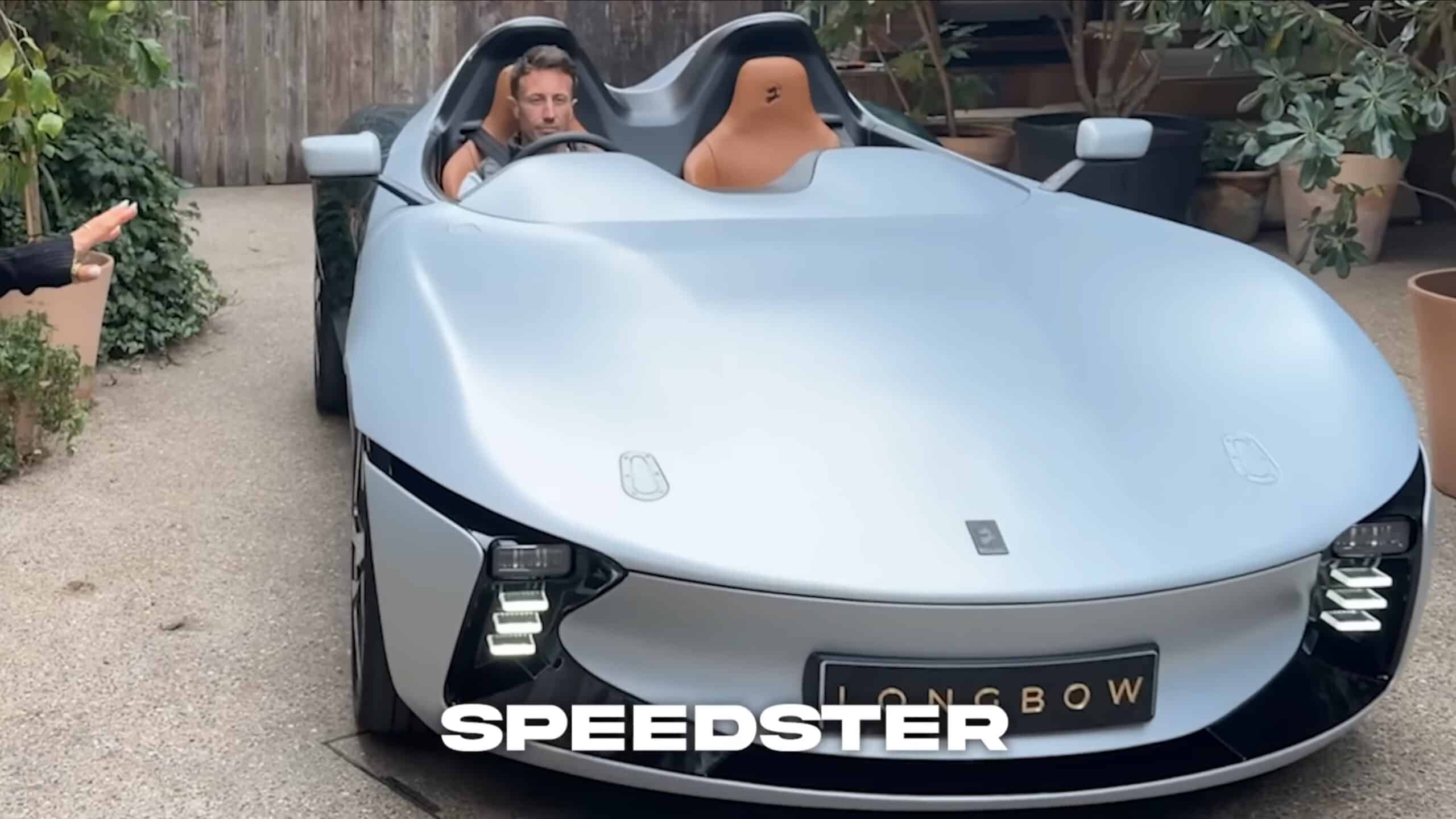

The philosophy of “simplifying and adding lightness,” famously coined by Colin Chapman, the founder of Lotus, resonates strongly in the realm of motorsports. Chapman believed in an approach that favored lightweight designs and minimal complexity. In the era of electric vehicles (EVs), this notion faces new challenges. While the electric powertrain brings about fewer moving parts and eliminates the need for a traditional fuel system, the inclusion of heavy batteries complicates the pursuit of lightness.
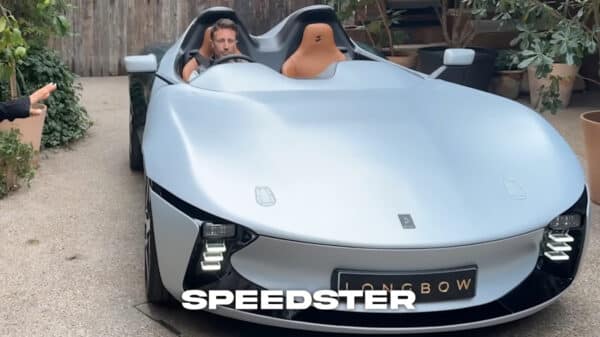
Enter Longbow, an innovative automotive venture co-founded by Daniel Davey and Mark Tapscott, both enthusiasts of Chapman’s principles. Having honed their expertise at Tesla and Lucid Motors, they are well-versed in the intricacies of the EV market. Along with Jenny Keisu, a Swedish tech investor, they are on a mission to realize a lightweight electric sports car that would align with Chapman’s vision—the Longbow Speedster.
A Lightweight Champion
Set to debut next year, the Longbow Speedster achieves an impressive weight of just 1,973 pounds—about 40% lighter than a Lotus Emira V6 and 16% lighter than a Mazda MX-5 Miata RF Club. This remarkable reduction in mass enables the Speedster to achieve a projected 0-60 mph acceleration time of just 3.5 seconds, powered by a single rear-mounted electric motor producing approximately 270 horsepower (exact figures pending). By comparison, the Emira V6 reaches 60 mph in 4.2 seconds, while the Miata takes 5.6 seconds.
When juxtaposed against the Chinese-made MG Cyberster, the Speedster’s lightweight philosophy stands out prominently. The Cyberster Legend necessitates two electric motors and all-wheel drive, boasting 536 horsepower to propel its hefty 4,872-pound frame from 0-60 mph in 3.1 seconds. Even the rear-drive Cyberster Trophy, which weighs 4,651 pounds and utilizes a single motor generating 335 horsepower, requires 4.9 seconds to reach the same speed.
While both Cyberster variants utilize a robust 77-kWh battery for a WLTP-rated range of 276 and 316 miles respectively, the Longbow Speedster is expected to feature a slightly smaller 55-kWh battery, still providing an estimated WLTP range of 275 miles. This compact battery design allows for a lower vehicle profile, avoiding the elevated feel typical of many electric vehicles.
A Modern Take on Sports Car Aesthetics
The exterior design of the Speedster captures classic sports car elements while incorporating a modern flair. COO Mark Tapscott describes it as a vehicle that avoids both futuristic radicalism and nostalgic pastiches. The design offers a nod to the Lotus Exige while embracing contemporary aesthetics through a dynamic visual language that is accentuated by optional two-tone finishes.
While the interior remains under development, Longbow has rapidly advanced from digital renders to drivable prototypes within just six months, showcasing a unique manufacturing approach. The company has concentrated on exterior design while outsourcing much of the hardware, including the e-motor, brakes, and electronics, to specialized suppliers, enhancing efficiency and cost management.
CEO Daniel Davey emphasizes that the advantages of not being vertically integrated, unlike many established automakers, allow Longbow to leverage high-quality, off-the-shelf components without incurring exorbitant R&D costs. This strategy enables them to harness economies of scale while maintaining agility.
Although some traditional automakers focus on developing their own electric systems, Longbow recognizes an emerging market of third-party suppliers offering exceptional EV solutions. They believe they can access components that rival those of Tesla in terms of performance, enhancing their competitive advantage.
Aligning with Chapman’s legacy, the Longbow Speedster aims to commercialize its platform and powertrain to other niche automotive manufacturers, reviving the spirit of the Lotus 7 in a modern context. The construction and sourcing of most Speedster components will occur in the U.K., showcasing British automotive prowess and innovation.
Limited Availability and Future Plans
The Longbow Speedster is set to be a limited edition, with only 150 units planned for production, each starting at around $110,000. Available in both right- and left-hand drive options, the Speedster is anticipated to attract significant attention, particularly in markets like California. However, U.S. buyers will have to wait for the Longbow Roadster, a variant equipped with a windshield and roof, estimated at $85,000 and anticipated to launch by 2027.
While the Speedster promises to be a delightful addition to the electric sports car landscape, the Roadster, expected to be slightly heavier, is designed to offer a blend of luxury and performance when it enters the market.
Conclusively, the Longbow Speedster encapsulates a fresh perspective on electric sports cars while remaining true to the essence of lightweight performance. With upcoming models that promise to further blend performance with everyday usability, the future looks promising for this innovative brand as it carves its niche in the evolving EV landscape.